How to Predict if Your Escape Room Business is Headed Up or Down
Escape Rooms have existed for a decade now, and many are trying to understand where things go from here. Predicting where your business is headed is valuable, but also feels very difficult, and a lot like guesswork. However, there is a proven model you can use to give you some fact based information on where your business is headed.
Escape room business is typically very cyclical. Most venues do well in summer months and holidays, while business typically slows in September and October. Some locations see slowdowns in May when temperatures are mild and people get busy with outdoor activities. Looking at month to month change makes it hard to spot actual trends beyond seasonal patterns.
But ITR Economics has spent decades proving that business cycles follow predictable patterns. They track something simple - how fast your revenue is growing or shrinking compared to last year.
That rate of change tells you which phase of the business cycle you're in. And more importantly, it tells you which phase is coming next.
The Two Numbers That Matter
Most business owners track monthly revenue. January was good. February was terrible. March bounced back. Those isolated numbers hide the actual trend.
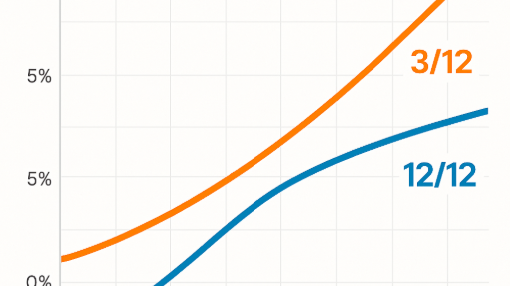
Using two rates of change - the 12/12 rate of change for annual growth and the 3/12 rate of change for quarterly growth - allows you to compare current performance to the same period one year ago.
12/12 Rate of Change
Take your total revenue from the last 12 months and compare it to your total revenue from the 12 months before that.
If you made $450,000 last year and $500,000 this year, your growth rate is 11%. This tells you where your business stands right now.
3/12 Rate of Change
Take your total revenue from the last 3 months and compare it to your total revenue from the same 3 months one year ago.
If you made $120,000 in the last quarter and $100,000 in the same quarter last year, your growth rate is 20%. This number moves faster and changes direction before your 12/12 catches up.
The Four Phases of Your Business Cycle
ITR Economics breaks every business cycle into four phases. Each phase tells you what's happening and what action to take.
Phase A: Recovery
Your 12/12 rate of change is negative but rising. You're still down compared to last year, but the decline is slowing.
This feels terrible because you're still below where you were. Pessimism dominates. It feels like business is bad and staying bad.
But if your 3/12 is climbing faster than your 12/12, you're actually at the bottom and about to turn upward. This is when smart operators invest in new rooms. Building a room takes three to six months, so starting now means you're ready when Phase B arrives and demand accelerates.
Phase B: Accelerating Growth
Your 12/12 rate of change is positive and rising. Revenue is expanding at an accelerating pace.
This is the best phase. Confidence is high because bookings are coming in and your team is busy.
This is when you should raise prices. Demand is climbing and customers are willing to pay more. You can also invest in staff training and lock in long term capacity. If you're thinking about selling your business, Phase B is typically when buyers pay premium prices.
Phase C: Slowing Growth
Your 12/12 rate of change is positive but declining. You're still up compared to last year, but growth is not as fast.
This is the most dangerous phase because everything still looks good. Revenue is growing. Your 12/12 is positive. Optimism from Phase B lingers. But you're on the slow side of the cycle.
Your 3/12 has likely turned negative while your 12/12 is still positive. That gap tells you the decline is coming. Don't build new rooms in Phase C. By the time construction finishes in three to six months, you'll be deeper into the downturn with lower demand.
This is when you should assess spending and focus on profitability over growth. Cash becomes more important than expansion.
Phase D: Recession
Your 12/12 rate of change is negative and declining.
Nobody enjoys Phase D. But this phase creates opportunities if you lead with strategy instead of panic. Competitors are cutting staff and abandoning projects. You can hire talented people they're letting go. You can develop new games and marketing campaigns while they're frozen.
The venues that use Phase D to prepare for the next cycle come out stronger.
The Signal That Tells You What's Coming
Your 3/12 typically leads your 12/12 by three to six months. When your 3/12 crosses above your 12/12 and stays there for three consecutive months, that's your signal. ITR Economics calls this a Checking Point.
You can be in Phase D with your 12/12 negative, but if your 3/12 crosses above it and holds for three months, you're about to enter Phase A.
You can be in Phase B with your 12/12 positive and rising, but if your 3/12 crosses below it and stays there, you're headed into Phase C.
That gap gives you three to six months of warning before the shift becomes obvious.
Track both numbers monthly. Plot them on a chart. Watch for the crossover.
Why This Works for Escape Rooms
Escape rooms are seasonal, and that seasonality makes monthly revenue misleading.
When you compare this January to last January, seasonality cancels out. When you compare this summer to last summer, you see the actual trend instead of the seasonal pattern.
The 12/12 smooths out those seasonal swings. The 3/12 picks up turning points faster. Together, they tell you if your business is accelerating, decelerating, or about to change direction and allow you to prepare.